
Patterson Veterinary holds the largest portfolio of CT and MRI systems in the veterinary market. We are experts at helping you find the system(s) that is right for you and teaching you how to use it. For either dentistry, general practice, emergency or specialty work, we have the system for you.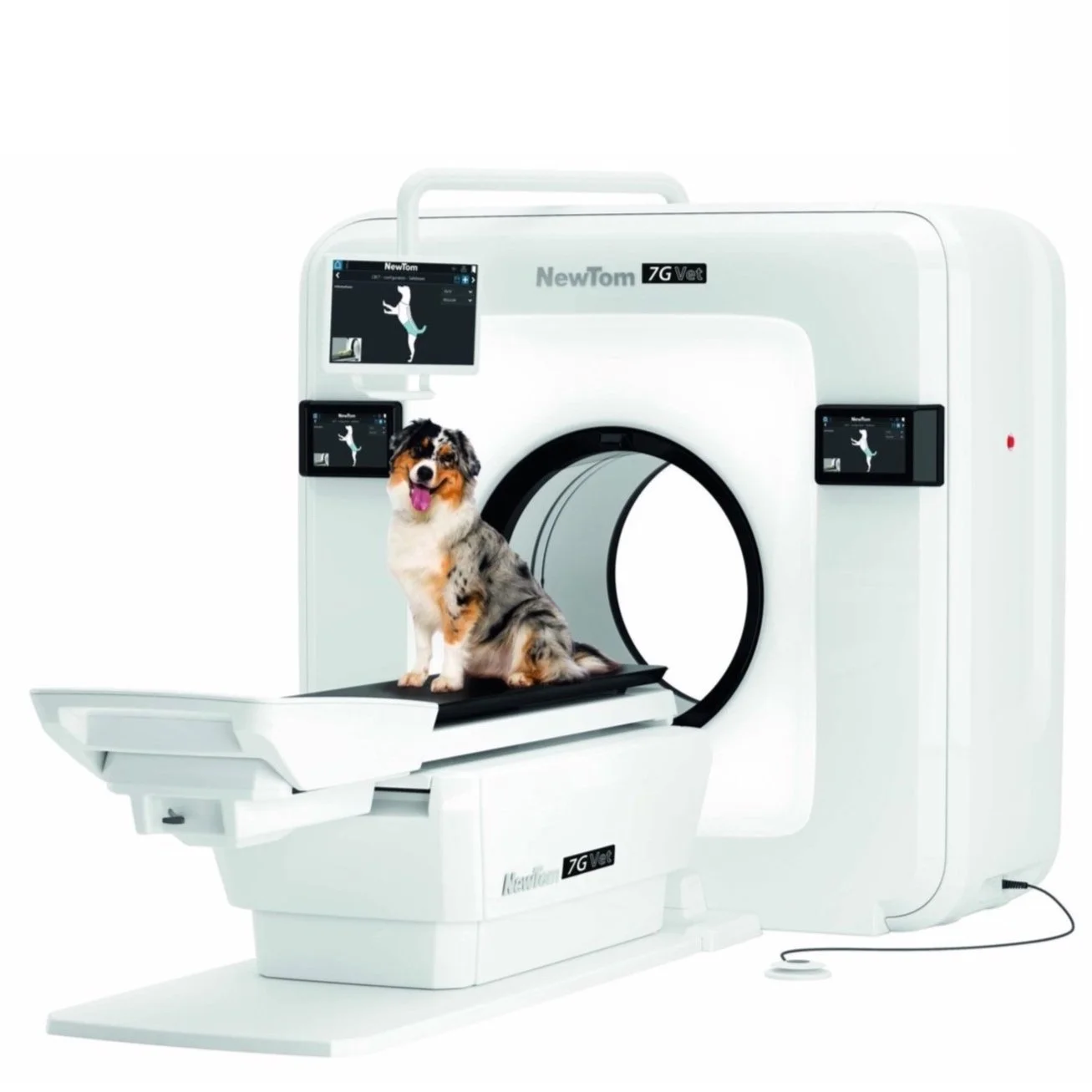



Veterinary Advanced Imaging Advisor · Systems
The right system starts with the work you want to do.
Dental detail, whole-body CT, advanced soft tissue, live procedural imaging, or a mobile program—start with the cases, your room, and your team. Then compare the systems that can actually meet those needs.
The guided CT path asks about your practice. The separate comparison tool shows model-by-model scores, tradeoffs, and a searchable CT catalog.
Open the objective CT comparison →01 · Computed tomography
Three CT families. Different strengths.
The same anatomy can be scanned on very different platforms. Spatial detail, low-contrast performance, acquisition time, field of view, patient access, footprint, and service matter more than a headline specification alone.
High-resolution CT / CBCT
Often a strong path for dental, ENT, fine bone, joints, and exotics. Compare motion sensitivity, soft-tissue needs, patient size, and usable field of view.
Examples to compare: NewTom 7G VET and 5G XL VET · Xoran VetCAT · VIMAGO GT30
Explore high-resolution CT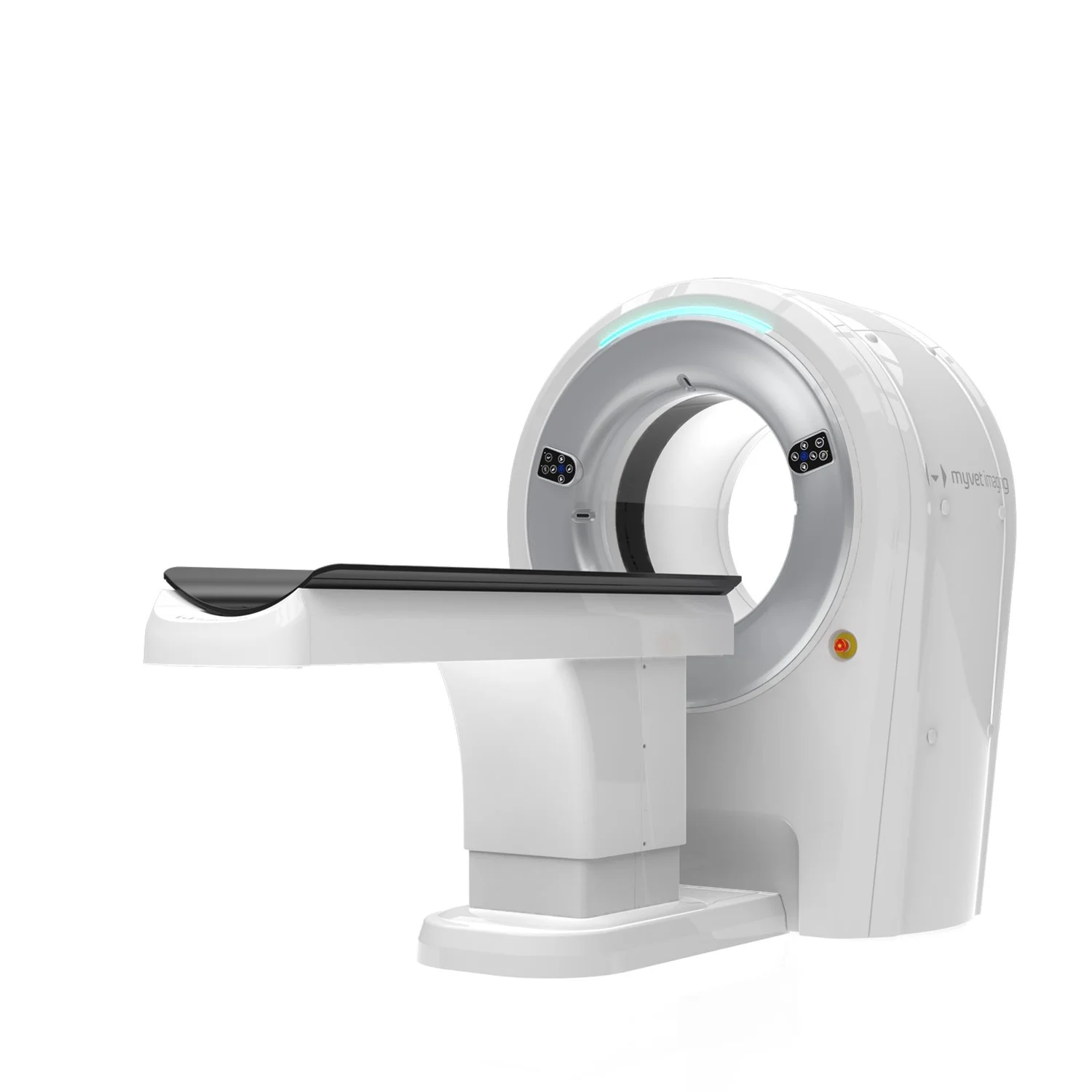
Helical / linear CT
Purpose-built veterinary systems can fit a constrained hospital. Compare scan geometry, acquisition time, anatomy range, and reading-group compatibility.
Examples to compare: MyVet CT Plus · CT i3D · CT D
Explore helical / linear CT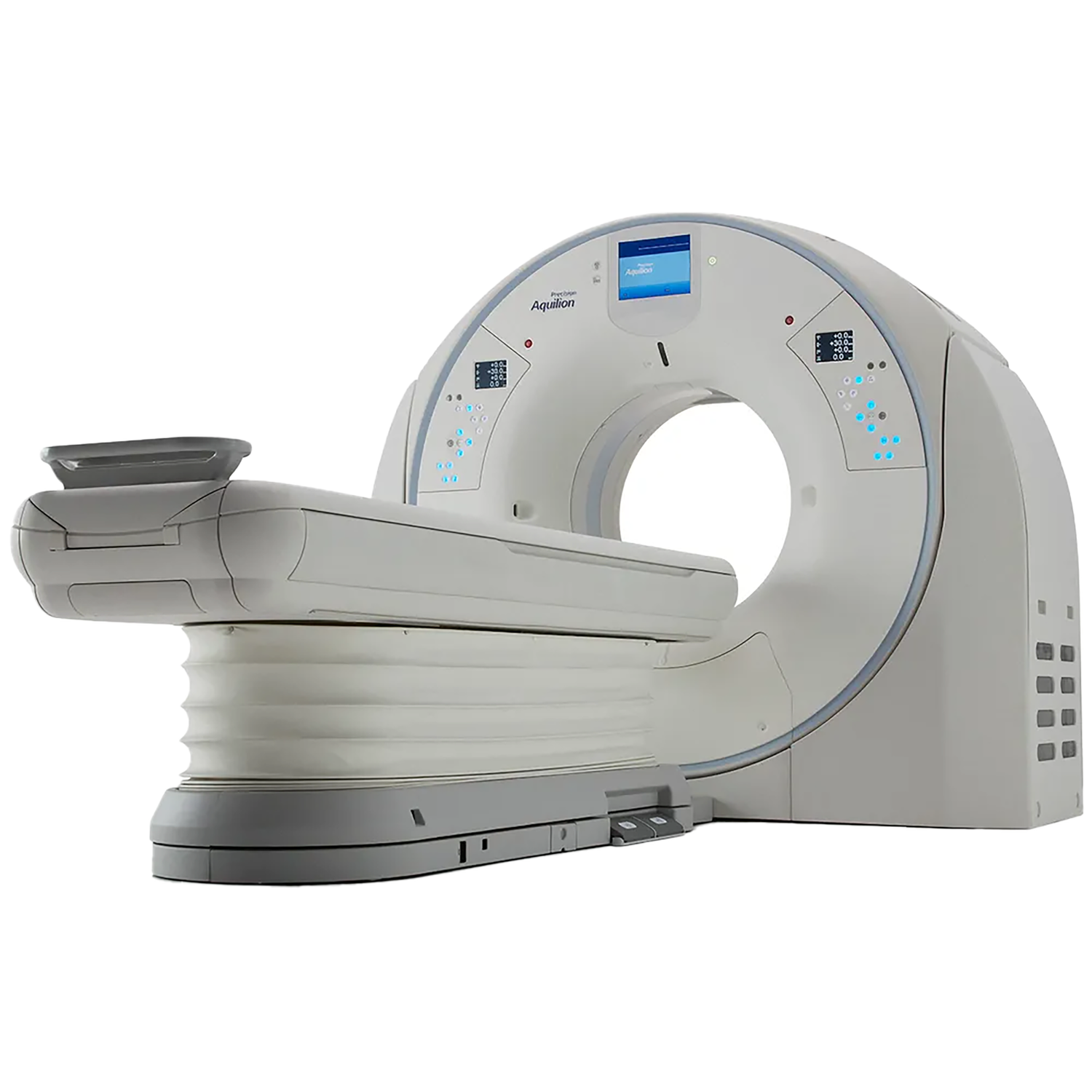
Multidetector CT / MDCT
The conventional multislice path for emergency and specialty programs, contrast studies, and higher throughput. Plan for room, power, cooling, rigging, and service.
Examples to compare: GE BrightSpeed 16, LightSpeed VCT 64 and Revolution ACT · Canon Aquilion 64 · Siemens SOMATOM
Explore multidetector CT02 · Beyond fixed CT
Other paths to the right answer.
Some hospitals need live procedural guidance, MRI contrast, or regional imaging access more than another fixed CT room. These decisions deserve their own clinical and operational review.

Fluoroscopy
Match field of view and C-arm geometry to procedures, patient size, table access, sterile field, and team movement. Pictured: a GE OEC 9900 Elite.
Examples to compare: 9-inch, 12-inch, Super C, and motorized configurations vary by exact unit.
Explore fluoroscopy
MRI
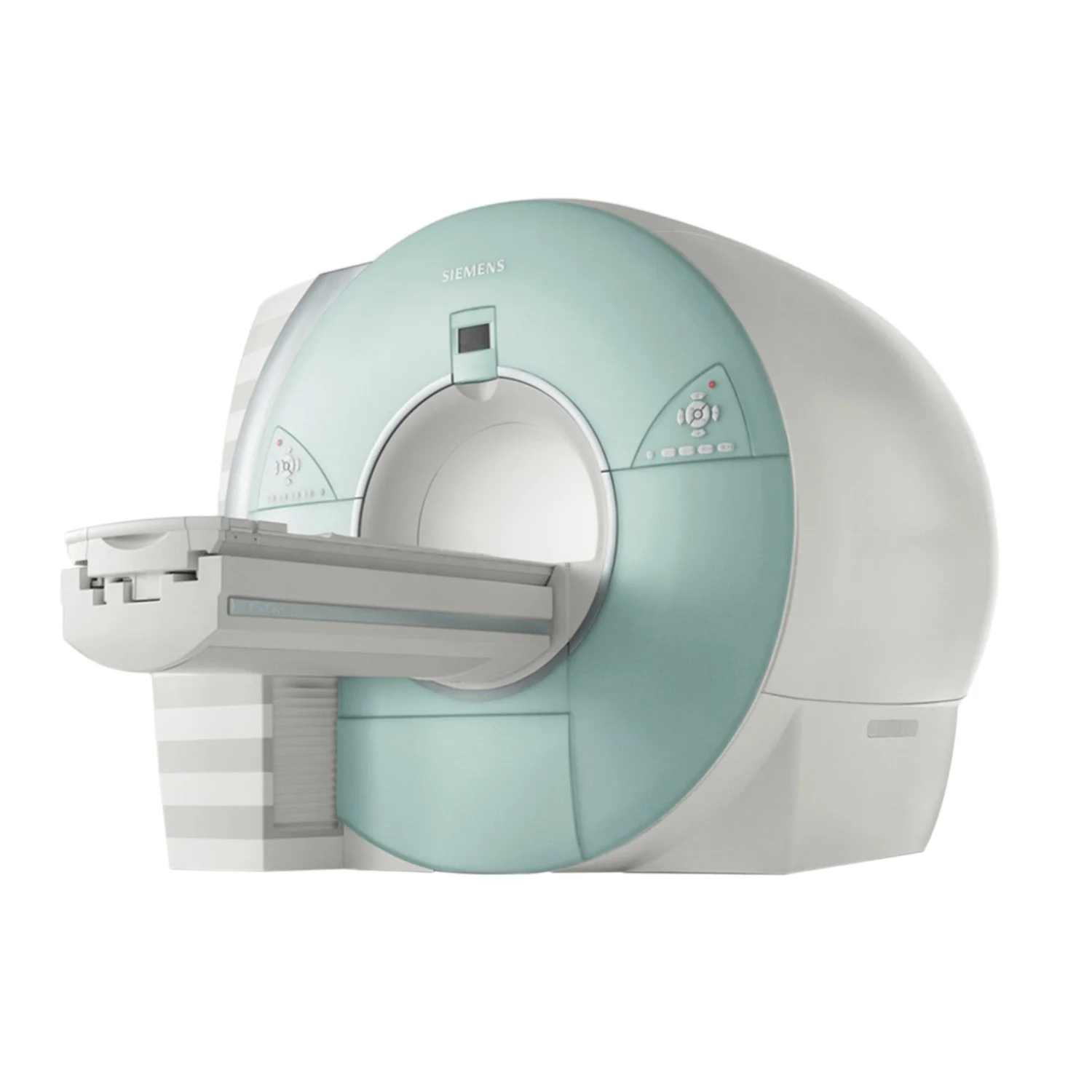
For programs where brain, spine, joints, and soft-tissue contrast drive the decision. Magnet, coils, site safety, anesthesia, service, and study volume matter.
Examples to compare: Hallmarq veterinary systems · configuration-specific refurbished MRI
Explore MRI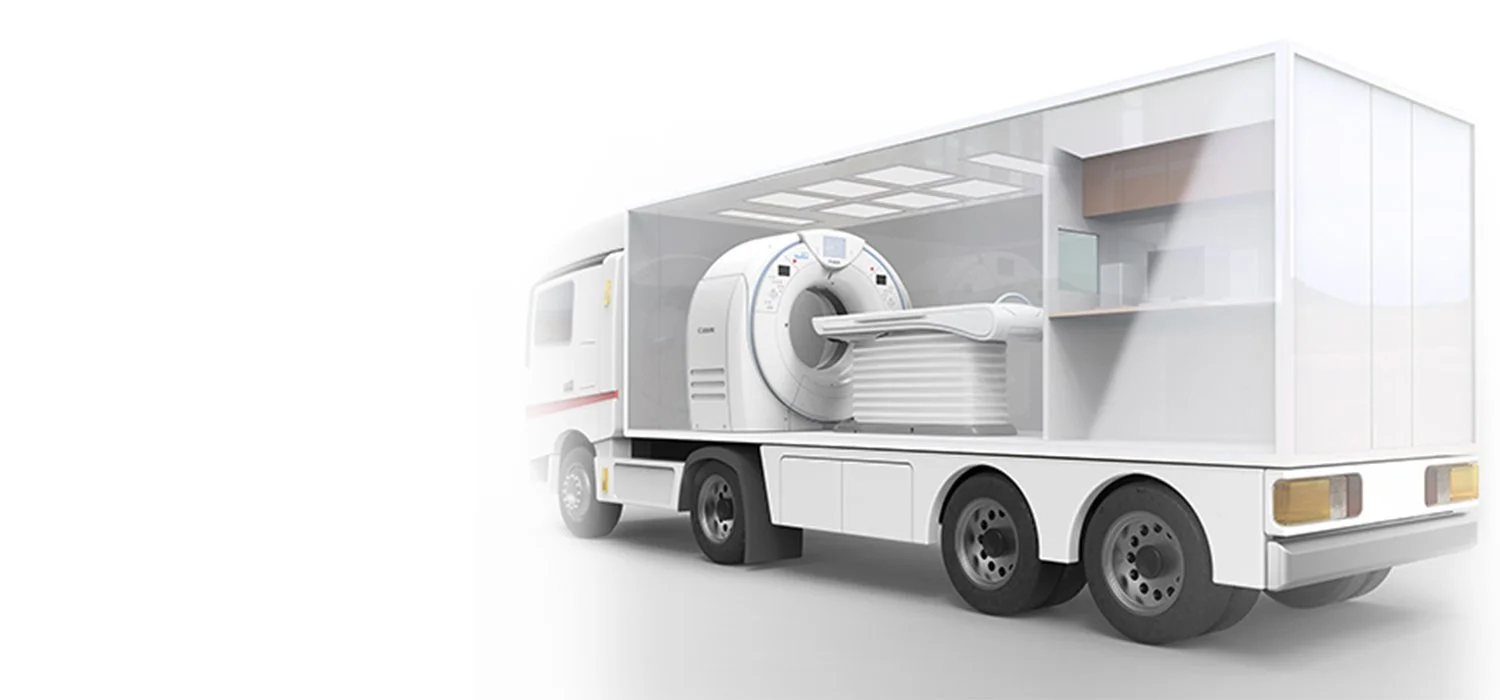
Imaging trucks
A mobile CT or MRI model can extend access across practices. Evaluate routing, patient transfer, staffing, power, site logistics, utilization, and service together.
Examples to compare: Mobile CT · mobile MRI · multi-hospital imaging programs
Explore imaging trucksWhat determines fit
The scanner is only one part of the decision.
Every recommendation should explain both why a system fits and what it asks of the hospital.
Clinical use
Cases, anatomy, patient size, motion risk, and interpretation.
Space and infrastructure
Room, power, shielding, access, cooling, and installation path.
Adoption and training
Doctor and technician workflows, protocols, and new-staff learning.
Budget and support
Total cost, service coverage, parts, and expected utilization.
Find your fit
Start with the decision you are making.
Use guided CT questions if you want a direction, compare the full CT library if you want model-level tradeoffs, or ask for help with any modality.