
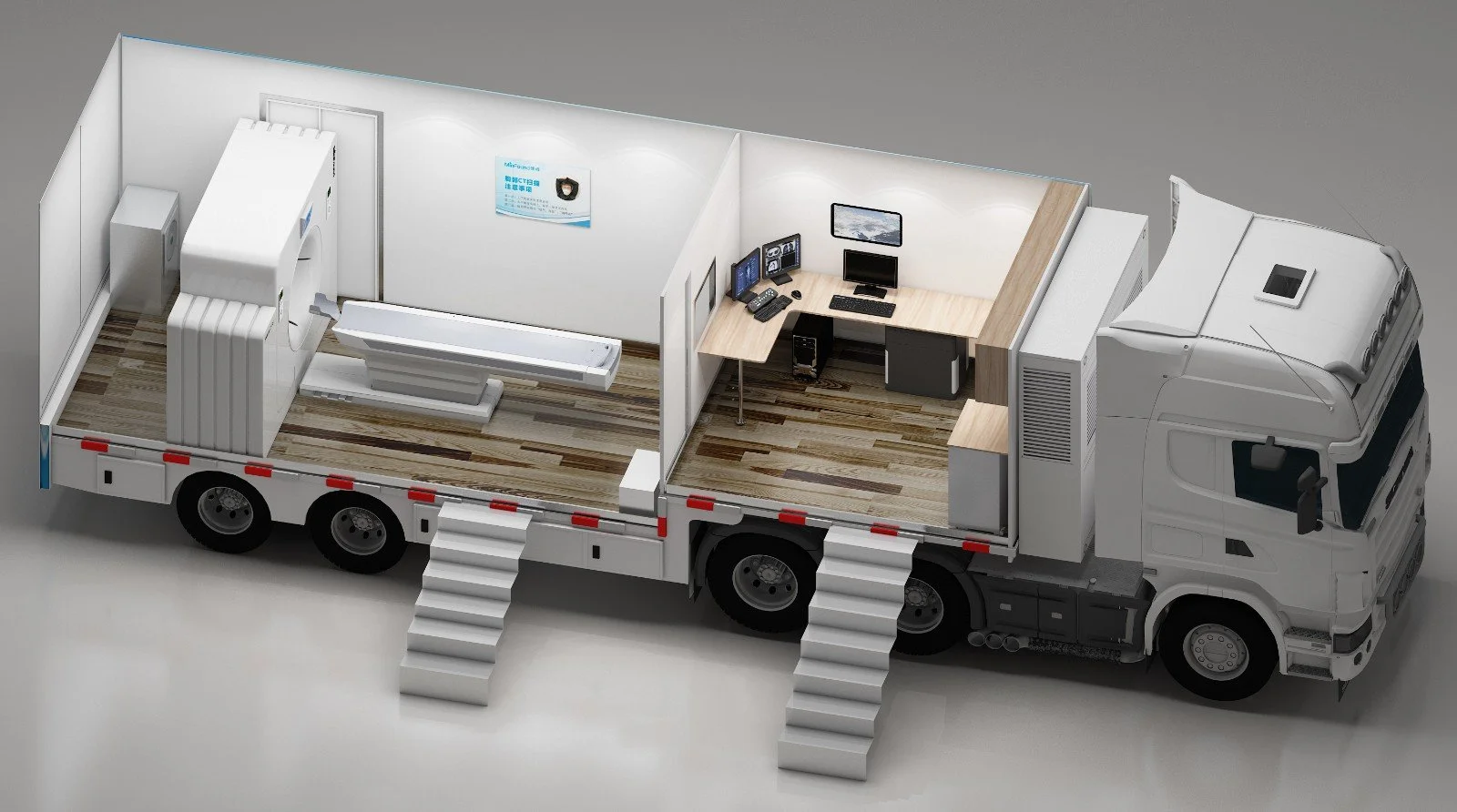
Veterinary Advanced Imaging Advisor · Mobile Imaging
Bring advanced imaging where it is needed.
Mobile CT and MRI can create a traveling imaging business, expand access across multiple locations, or provide temporary capacity while a permanent installation is planned or restored.
The imaging suite has to travel—and still perform.
A mobile project combines imaging equipment, trailer or coach design, power, cooling, shielding, networking, leveling, patient access, route planning, regulatory requirements, service logistics, and business development. Each stop must function like a dependable imaging department.
Build a mobile program
Create a service that travels to veterinary hospitals or regional partners.
- Define geography and customer model
- Plan scheduling and patient handoff
- Model utilization, travel, and staffing
Share advanced imaging
A mobile platform can extend CT or MRI access across a hospital group or market.
- Confirm site readiness at every location
- Standardize utilities and connection procedures
- Plan image transfer and interpretation
Temporary capacity
A trailer can bridge installation, renovation, unexpected downtime, or short-term demand.
- Validate mobilization timing and availability
- Confirm temporary siting and access
- Coordinate service and contingency planning
Make the decision around the practice.
Mobile imaging succeeds when equipment, vehicle, host sites, route, staffing, interpretation, service, and economics are designed together. The project should be scoped as an operating model—not a scanner placed in a trailer.
Strong fit when
- Multiple sites can support meaningful utilization
- Host locations can meet access and utility requirements
- Staffing, routing, and interpretation are defined
- The business case accounts for travel and downtime
Questions to resolve first
- Is this a mobile business, shared resource, or temporary need?
- Which modality and patient range are required?
- What utilities and access are available at each host site?
- How will scheduling, image transfer, service, and regulatory needs be managed?
Plan the whole program—not only the scanner.
Clinical fit is only the first decision. Patterson helps connect site readiness, workflow, training, interpretation, service, and financial planning before a final configuration is selected.
Map the route, sites, and workflow before the vehicle.
We can help define the imaging platform and the operating requirements as one project.
Sources: Vehicle-integration and modality site-planning documentation; applicable OEM technical literature; and current service requirements. Verify modality, vehicle weight and access, power, environmental limits, routing, staffing, and service coverage for the exact configuration.
Veterinary Advanced Imaging Advisor is independently maintained by Chris Weaver, National Imaging Manager at Patterson Veterinary, and is not an official Patterson Companies website. Recommendations begin with clinical need, space, workflow, budget, team readiness, and long-term support. They may include systems Patterson does not sell; when an outside option is the best fit, it will be identified clearly.